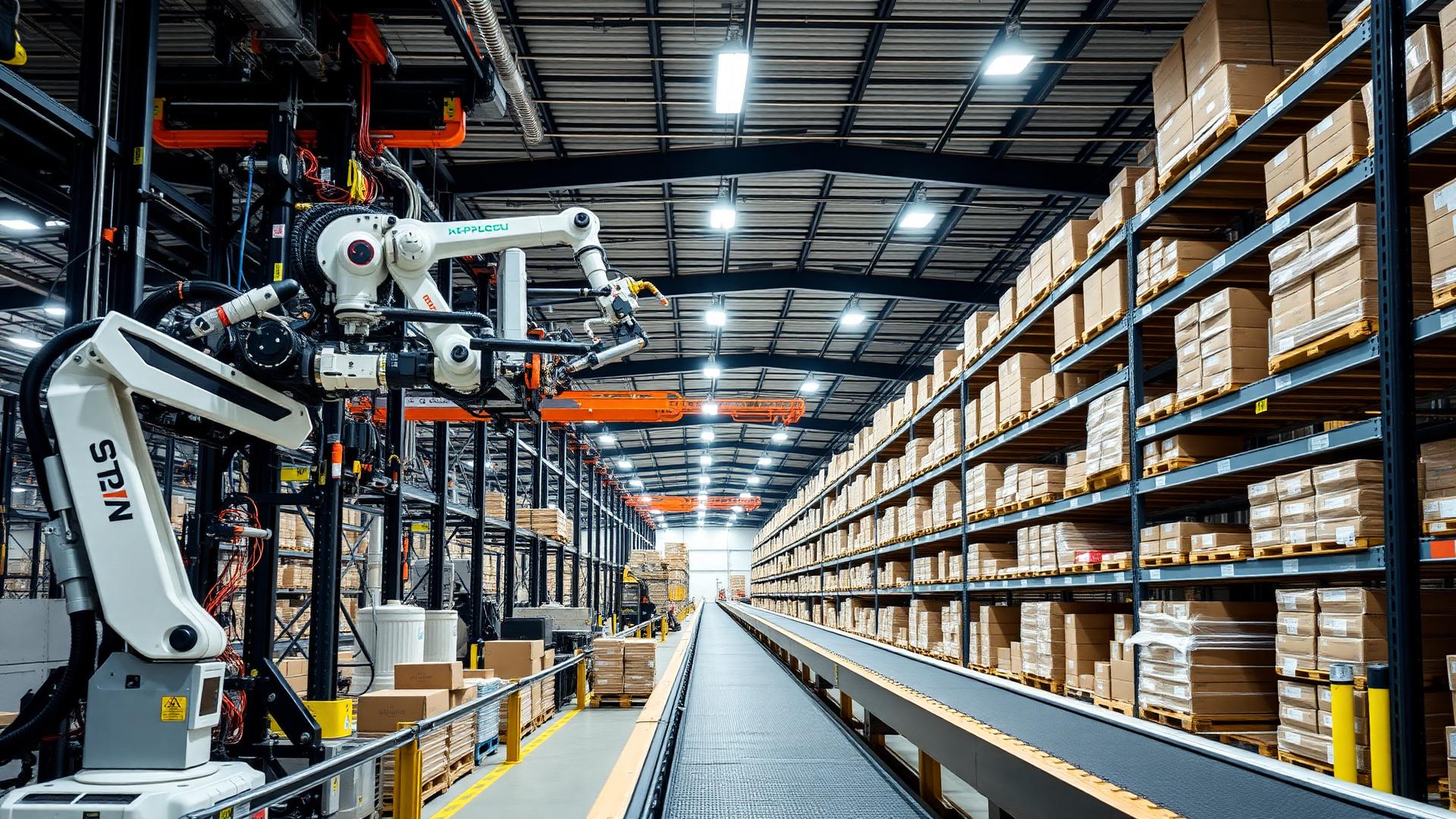
The Automation Revolution in Warehousing
The warehouse of 2026 looks dramatically different from the warehouse of just a decade ago. Automation technologies are transforming every aspect of warehouse operations—from receiving and storage to picking, packing, and shipping. Companies that embrace warehouse automation are seeing dramatic improvements in efficiency, accuracy, and throughput while reducing labor costs and workplace injuries.
The global warehouse automation market is projected to reach $41 billion by 2027, driven by labor shortages, rising e-commerce volumes, and the increasing complexity of order fulfillment. For logistics companies and retailers, the question is no longer whether to automate, but how and how quickly.
Key Automation Technologies
Autonomous Mobile Robots (AMRs)
AMRs are among the most widely adopted warehouse automation technologies. Unlike traditional automated guided vehicles (AGVs) that follow fixed paths, AMRs use sensors, cameras, and AI to navigate dynamically through the warehouse. They can adapt to changing environments, avoid obstacles, and optimize their routes in real time.
AMRs are used for a variety of tasks, including transporting goods between work stations, supporting picking operations, and moving completed orders to shipping areas. Their flexibility and ease of deployment make them an attractive option for warehouses of all sizes.
Automated Storage and Retrieval Systems (AS/RS)
AS/RS technology maximizes storage density while enabling rapid retrieval of items. These systems use automated cranes, shuttles, or vertical lift modules to store and retrieve goods from high-density racking systems. By utilizing vertical space more effectively, AS/RS can increase storage capacity by 40-60% compared to traditional racking.
Modern AS/RS systems are highly scalable and can be integrated with warehouse management systems (WMS) for seamless inventory tracking and order fulfillment.
Robotic Picking Systems
Robotic picking—long considered one of the most challenging automation problems—has made significant advances. Vision-guided robots can now identify, grasp, and place a wide variety of items with high accuracy. While fully autonomous picking is still limited to certain product categories, hybrid systems that combine robotic assistance with human oversight are becoming increasingly common.
These systems can increase picking productivity by 200-400% while virtually eliminating picking errors. As the technology continues to improve, the range of products that can be picked robotically will expand significantly.
Automated Sorting Systems
High-speed sorting systems use conveyors, diverters, and scanning technology to automatically route packages to the correct shipping lanes. Modern sorting systems can process thousands of packages per hour with near-perfect accuracy, making them essential for high-volume distribution centers.
Cross-belt sorters, tilt-tray sorters, and sliding shoe sorters each offer different advantages depending on the size and nature of the items being processed. The choice of sorting technology depends on throughput requirements, item characteristics, and facility layout.
Warehouse Management Systems (WMS)
The software that orchestrates warehouse operations is just as important as the physical automation. Modern WMS platforms provide:
Cloud-based WMS solutions are making sophisticated warehouse management accessible to smaller operations that may not have the IT resources for on-premise systems.
Implementation Considerations
Assessing Automation Readiness
Not every warehouse process needs to be automated. The best approach is to start by analyzing your current operations to identify bottlenecks, high-cost activities, and error-prone processes. Focus automation investments on areas that will deliver the greatest return.
Key factors to consider include:
Phased Implementation
Most successful automation projects follow a phased approach. Start with a pilot in one area of the warehouse, prove the concept, refine the processes, and then expand to other areas. This approach reduces risk and allows the organization to build automation expertise gradually.
Change Management
Automation changes how people work, and managing this transition is critical for success. Invest in training programs, communicate clearly about how automation will affect roles, and involve warehouse staff in the planning process. The most successful automation implementations create new opportunities for workers to take on higher-value roles.
The Impact of Automation on the Workforce
Contrary to common fears, warehouse automation often creates more jobs than it eliminates. While routine manual tasks may be automated, new roles emerge in areas such as robotics maintenance, system programming, data analysis, and operations management. The key is to invest in retraining and upskilling programs that prepare workers for these new roles.
Looking Forward
The pace of warehouse automation innovation shows no signs of slowing. Emerging technologies on the horizon include:
At QRS Express, our state-of-the-art warehousing facilities incorporate the latest automation technologies to ensure fast, accurate, and reliable order fulfillment. Whether you need short-term storage, long-term warehousing, or full-service distribution, our automated facilities deliver superior performance and value.